
The Schotta Lab
Epigenetic regulation
Category: new publication
-
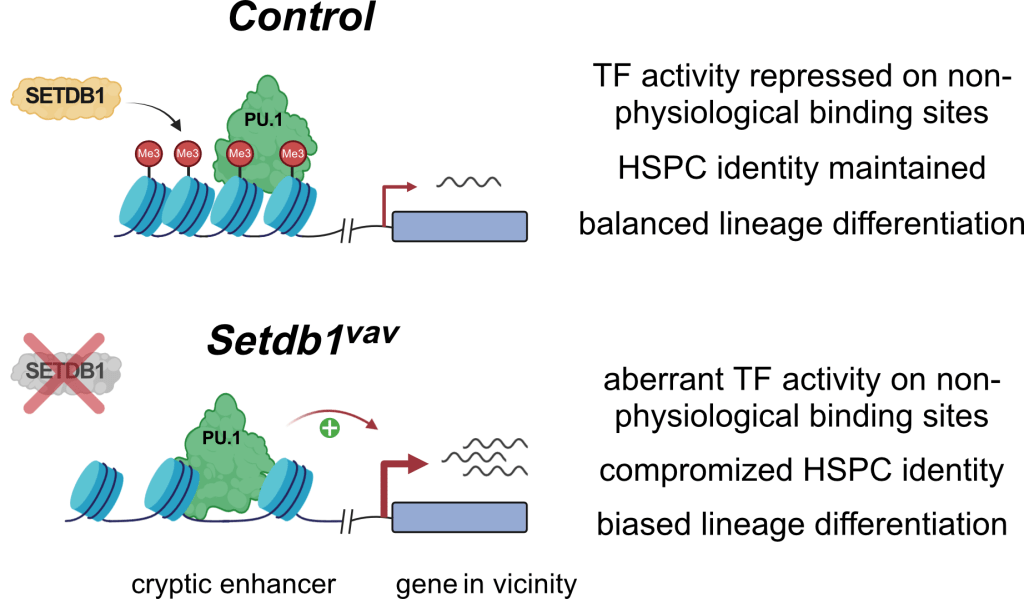
ERV-derived cryptic enhancers
Our data show that histone methyltransferase SETDB1 is critical for preventing transcription factor (TF) activity on nonphysiological binding sites, in part overlapping with mouse endogenous retrovirus sequences. When SETDB1 is lacking, these cryptic enhancers can become overly active, leading to abnormal expression of nearby genes. This disruption coincides with compromised function of stem cells, altered…
-
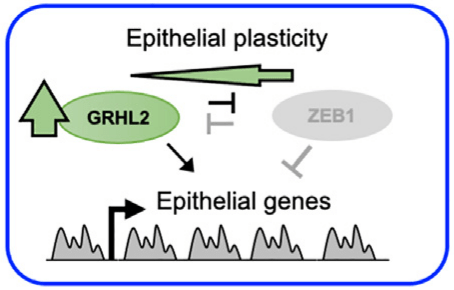
Unveiling EMT Resistance in Metastatic Breast Cancer
This study sheds light on the mechanisms underlying the progression of metastatic breast cancer. Resistance to epithelial-mesenchymal transition (EMT) plays a crucial role in sustaining the clonal propagation of metastatic breast cancer. EPCAM(high) cells from metastatic biopsies have the ability to propagate breast cancer in xenografts. Irreversible EMT leads to restrained tumorigenic potential in specific…
-
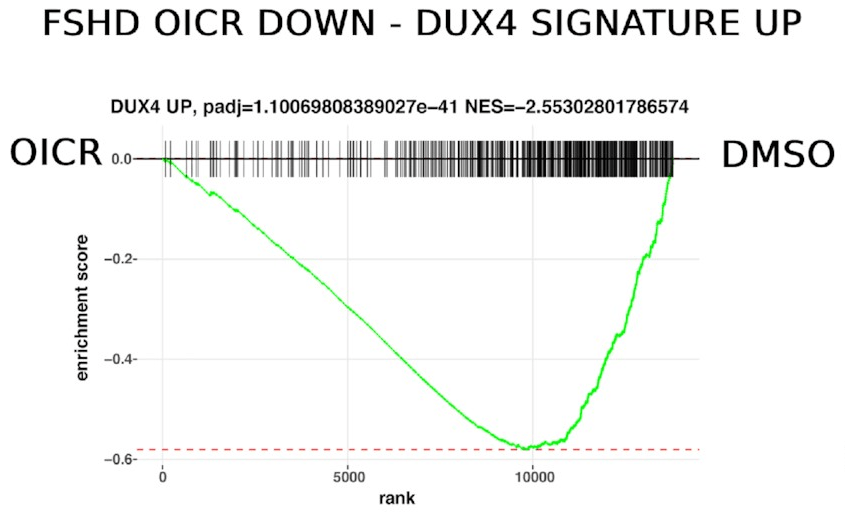
WDR5 as novel druggable target in FSHD
Facioscapulohumeral muscular dystrophy (FSHD) is an inherited progressive neuromuscular disorder. The Gabellini lab could identify WDR5 as critical regulator for aberrant reactivation of DUX4 expression in FSHD, that triggers pathways toxic to skeletal muscle, including inhibition of myogenic differentiation and cell death. WDR5 can be inhibited with a small molecule compound and provides a potential…
-
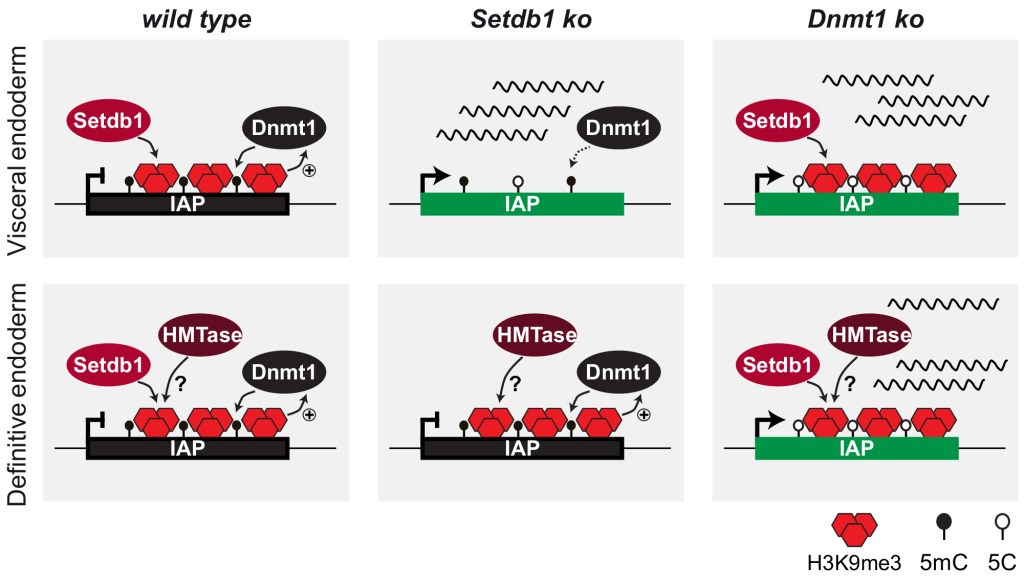
H3K9me3 not sufficient for ERV silencing
H3K9me3 is not sufficient for silencing endogenous retroviruses if DNA methylation is perturbed. In Dnmt1 ko endoderm cells, IAP elements fully maintain H3K9me3, while trancriptionally active. great collaboration with Heiko Lickert and Heinrich Leonhardt labs, out in Nature Communications
-
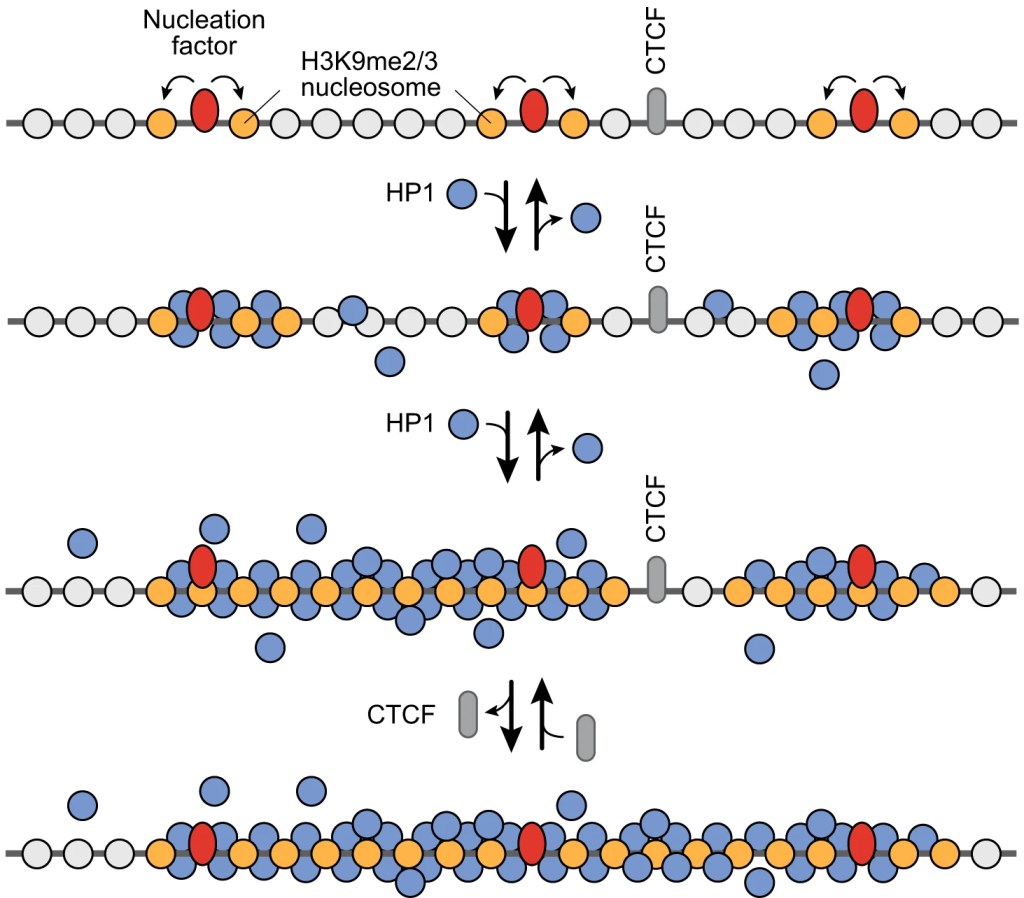
Heterochromatin Nanodomains
How are heterochromatin nanodomains established? Sequence motifs provide nucleation sites, DNA sequence elements, nucleosome interactions and HP1-nucleosome interactions regulate spreading great to be part of this collaboration, out in Nature Communications
-
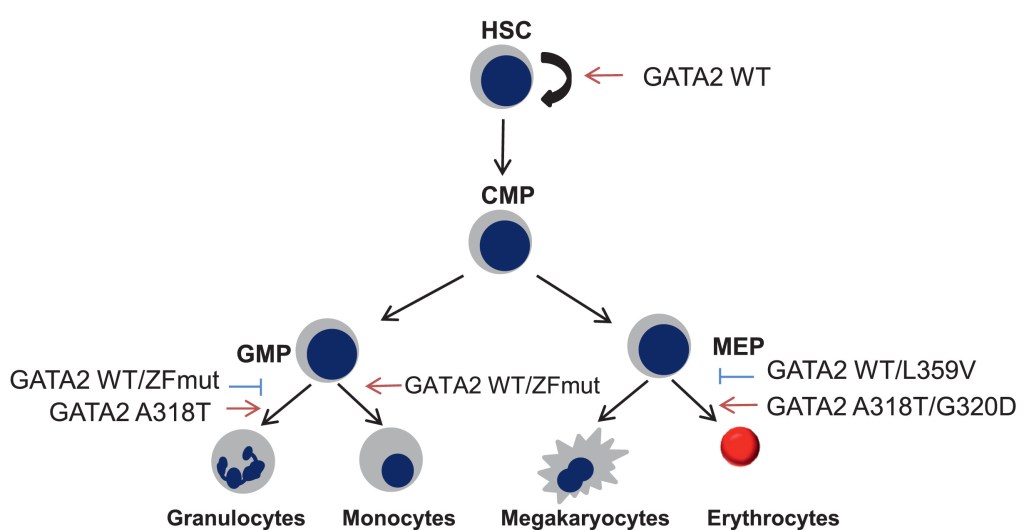
GATA2 mutations in leukemia
GATA2 zinc-finger mutations affect hematopoietic differentiation and might help to explain the role of these mutations in chronic myeloid leukemia and erythroleukemia. collaboration paper headed by Philipp Greif, out in Experimental Hematology
-
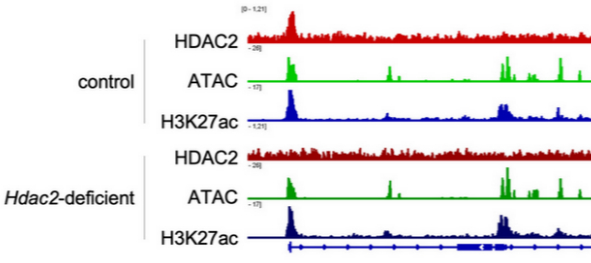
HDAC2 in PDAC
HDAC2 has a context-specific role in undifferentiated PDAC and the capacity to disseminate systemically, implicating HDAC2 as targetable protein to prevent metastasis. collaboration headed by Günter Schneider within SFB1321 – out in Cancer Research
 The Schotta Lab