A collaborative study in Nature Neuroscience shows how the transcription factor FOXF2 helps maintain brain endothelial cell function through Tie2 signalling. Our lab contributed the FOXF2 ChIP-seq, bringing our expertise in transcription factor biology to this work.
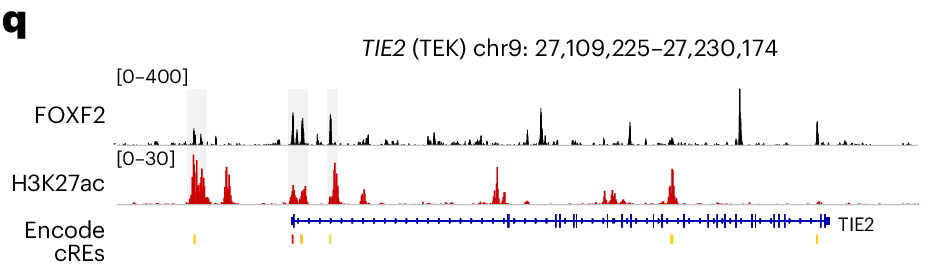
ChIP-seq maps where a protein binds to DNA across the genome. Combined with the study’s gene expression analyses, the FOXF2 binding data helped identify endothelial genes regulated by FOXF2, including the gene encoding Tie2.
In mice, deletion of Foxf2 in endothelial cells disrupted the blood–brain barrier and worsened damage after experimental stroke. These findings connect a stroke risk gene with a specific mechanism controlling vascular function.
This collaboration reflects our interest in how transcription factors interact with chromatin and control gene activity, and how altered gene regulation contributes to disease.
Todorov-Völgyi et al. Nature Neuroscience 29, 325–336 (2026). Read the paper ↗ · Free full text ↗


Discussion